

Introduction
In my own words is a new blog series that will explore concepts that I have limited experience with . Each post will define a concept and break it down in my own language. The goal is to present information that is easy to grasp for myself and the reader.
Today’s Post: Interest Rate Swaps
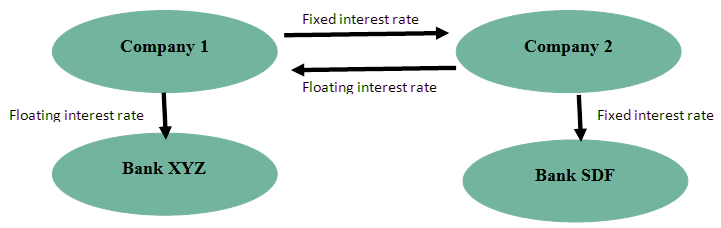
Interest rate swaps are an important financial tool commonly used in large-scale business deals such as mega projects, investments, or M&A. The swap itself is a financial contract that states two firms will make interest payments on an agreed notational value to each other based on different interest rates. Generally, this is a fixed rate for a variable rate or vice versa. The variable rate is usually the SOFR (Secured Overnight Financing Rate) that is published by the Fed each day. The Fed describes this rate as the cost of borrowing cash overnight collateralized by Treasury bills.
What are these for?
There are a few reasons why a firm would participate in such a transaction. Often, they are used between two financial firms and focus on the cash flow between a floating and a fixed interest rate for investment vehicles such as bonds. This exchange is either speculative or for portfolio management purposes. However, I am most interested in why a non-financial institution would use this type of contract to mitigate risk. From my understanding a non-financial firm could mitigate risk by creating a notational value on liabilities (loans) that have an unfavorable fixed or variable rate. They could then mitigate risk on the loan payments by swapping rates with a financial firm. Let’s say an oil company has a 6% fixed rate on a 200-million-dollar loan but foresees interest rates dropping. They could swap with another institution for a variable rate (SOFR) that is also around 6% on 50% of the loan value (notational value). If interest rates fall to 5%, the swap would benefit the oil company by a net of $1 million as they pay $5 million on the variable rate while the other institution pays $6 million on the notational value.
In this simplified hypothetical situation, it is clear who benefits. In a real deal both parties would have to agree on the financial viability of a deal based on different desires or requirements such as credit risk, liquidity ratios or future interest rate hedging. For example, the financial firm may have lost $1 million the first year but they agreed on the swap to hedge against rising rates in the future and therefore are willing to take a loss. Looking at the feature image at the top you can also see how a bank may complete multiple swaps at a time, while one may look unfavorable it could be just part of a larger swap strategy. I find it fascinating swaps can be used to leverage the financial picture of a company in the short and long term. It is usually just a small part of one line item (interest rate expense), that can be used to modify debt structures on large projects or general operations to mitigate risk and optimize the bottom-line year over year.
 Dual Waters