

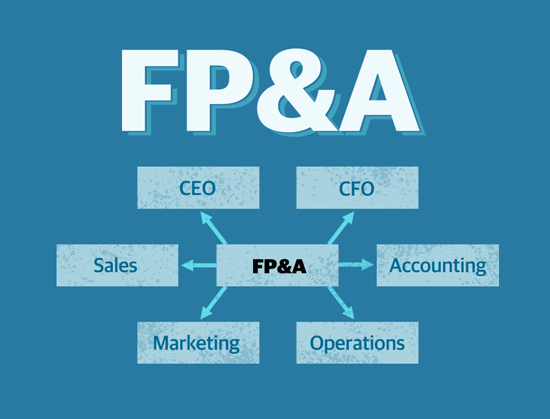
Excellent financial planning and analysis can provide excellent value-add to a company’s operating efficiency. By being able to effectively analyze financial data, a company can improve the decision-making process. There are many valuable types of analysis that are often used together such as cash flow analysis, variance analysis, or sensitivity analysis to name a few. However, these concepts are relatively straightforward, and a simple YouTube search can show you how to do one if you really invest the time into learning. In this post I want to explore some other factors that add to the FP&A process for companies outside financial services that are often underestimated and underappreciated by young professionals like myself as well as many experienced professionals.
Eye Power
The power of seeing operations in action should be used to improve a business’s analytical decision-making process. I think after cranking out excel files all day it is natural to disassociate from the “why” behind the work and this can snowball into a misunderstanding of a company by many employees. For example, let’s say you are evaluating a P&L for a presentation at work. One thing you probably focus on is the gross margin number and its percentage of revenue. This is a key metric of profitability usually used to assess efficiency because it shows the effect direct costs have on revenue. And say, while you are creating this presentation you evaluate the long-term trend of the values, highlight the cost drivers such a raw material, direct labor and overhead, and then finally formulate cost reduction strategies that sound great, and you’re done. Great right?
Well, what I think you miss out on here is the real application to your work and that is why I believe going to see what the numbers represent is necessary for business leaders as well as junior members of the team. If you take my example of looking at gross margin and add a factory or warehouse visit once a year, you can add value to your analysis. Say the factory has a machine that breaks often, untrained employees, or inventory management issues. These issues have a direct association with gross margin that are left unaddressed, therefore you can apply these considerations to your conclusions. If these issues are unresolved and a solution for the gross margin % is just to increase volume, pricing, or reduce large direct costs then you may miss out on large efficiency gains.
In my experience, I have visited factories and warehouses of multiple small and large businesses and was surprised by the tens of thousands of dollars a bottleneck in the process can create. I could only imagine the compounding effect of a few severe bottlenecks in a year that could be mitigated by a one-time purchase of new equipment or a talented hire. At the very least a visit adds confidence to the conclusions of any analytical report.
Data Governance & Background Knowledge
The advance of technology has created some amazing tools for financial planning and analysis. The effective use of data storage with ERP systems contributes to instant access of company information. When done right, trustworthy data flows through the system and ultimately into financial models and reports. When done wrong, inaccuracies are compounded, and results are skewed. Herein lies a major issue for businesses without the bandwidth to properly integrate technology because the skillset of analysts is different than the skillset of data managers or collectors. Database managers and supervisors need to understand (or create) the skeleton that company data flows into to form the database. Things like sourcing, control policy, and security are on the top of their to-do list. While analysts use this data to create valuable insights for management. For anything but a small business, you really can’t do both.
Imagine what can occur in this process if an error in the data flows in for the finance department to use in a forecasting model for monthly sales. This data inherently has systemic uncertainty due to external factors such as consumer taste or economic events therefore forecasting is already difficult. When an error in data loading and reconciling occurs the inaccuracy of the forecast increases on top of the already difficult task. When this occurs the value of the model, and all the time spent on it, is minimal.
Now, the answer to fixing this is simple, don’t let errors slide. But when 50% of organizations still rely on spreadsheets for at least part of their analyses (Business Wire, 2019). And around 50% are still looking to implement or upgrade ERP systems, it’s not hard to imagine a data slipup (Biel, 2023).
In my opinion, the answer to this issue comes in two places. One is offering data governance resources for employees and two is making sure individual values used within an analysis are understood by those involved.
Data governance resources should include training or introductory material to database management and the security and controls put into place to ensure accurate data. When data gets to a spreadsheet, there is usually minimal security on the numbers. By creating transparency from sourcing to the result, analysts will have a better understanding of the process. For example, how data becomes available, what are the steps of the process, and how can one click of a button through an ERP system give me the correct information. A comprehensive training plan also offers a transmission of knowledge to new hires that can be utilized if talent leaves the organizations. One talented hire can then give the necessary information to the rest of the hierarchy.
Understanding the meaning behind the numbers seems simple enough but can really help pinpoint errors. What I mean by this is employees should familiarize themselves with every value in their analysis as an internal control. Take my earlier example of a sales forecast, if the sales forecast for next month is $10 million but last month it was $3 million, a red flag should go up in your head. Rather than parading your model for being promising, maybe question why the output was 233% higher than last month. Are inflation rates steadying, is our volume up, are we offering a new product? Obviously, this is an extreme example, but it happens in many industries. By then internalizing the values in your model and asking yourself questions you can be an internal check for the organization as well as having more confidence in your results.
There are many other factors that can help the FP&A process, whether it be different types of quantitative analysis or external qualitative factors, all must be considered to optimize the results. Data governance and understanding, and eye power are just two factors that I think are underappreciated but very valuable to the process. By implementing them I think it gives that much more of an edge over the competition in the long run.
References:
Biel, J. (2023). “60 Critical ERP Statistics: 2022 Market Trends, Data and Analysis.” Oracle NetSuite. https://www.netsuite.com/portal/resource/articles/erp/erp-statistics.shtml#:~:text=ERP%20Usage%20Statistics%201%20Manufacturing%20companies%20are%20the,most%20likely%20to%20use%20ERP%20software.%20More%20items
Businesswire.com (2019). ” Study Finds Spreadsheet Risk Is Real; Businesses Are Aware of the Risk-Yet Despite Relying on This Data to Make Key Business Decisions-the Risk Is Ignored | Business Wire https://www.businesswire.com/news/home/20190612005248/en/Study-Finds-Spreadsheet-Risk-is-Real-Businesses-are-Aware-of-the-Risk%E2%80%94Yet-Despite-Relying-on-this-Data-to-Make-Key-Business-Decisions%E2%80%94the-Risk-is-Ignored#:~:text=1%20Despite%20easy%20manipulation%20and%20a%20lack%20of,spreadsheets%20to%20fuel%20their%20decision%20making.%20More%20items
 Dual Waters