

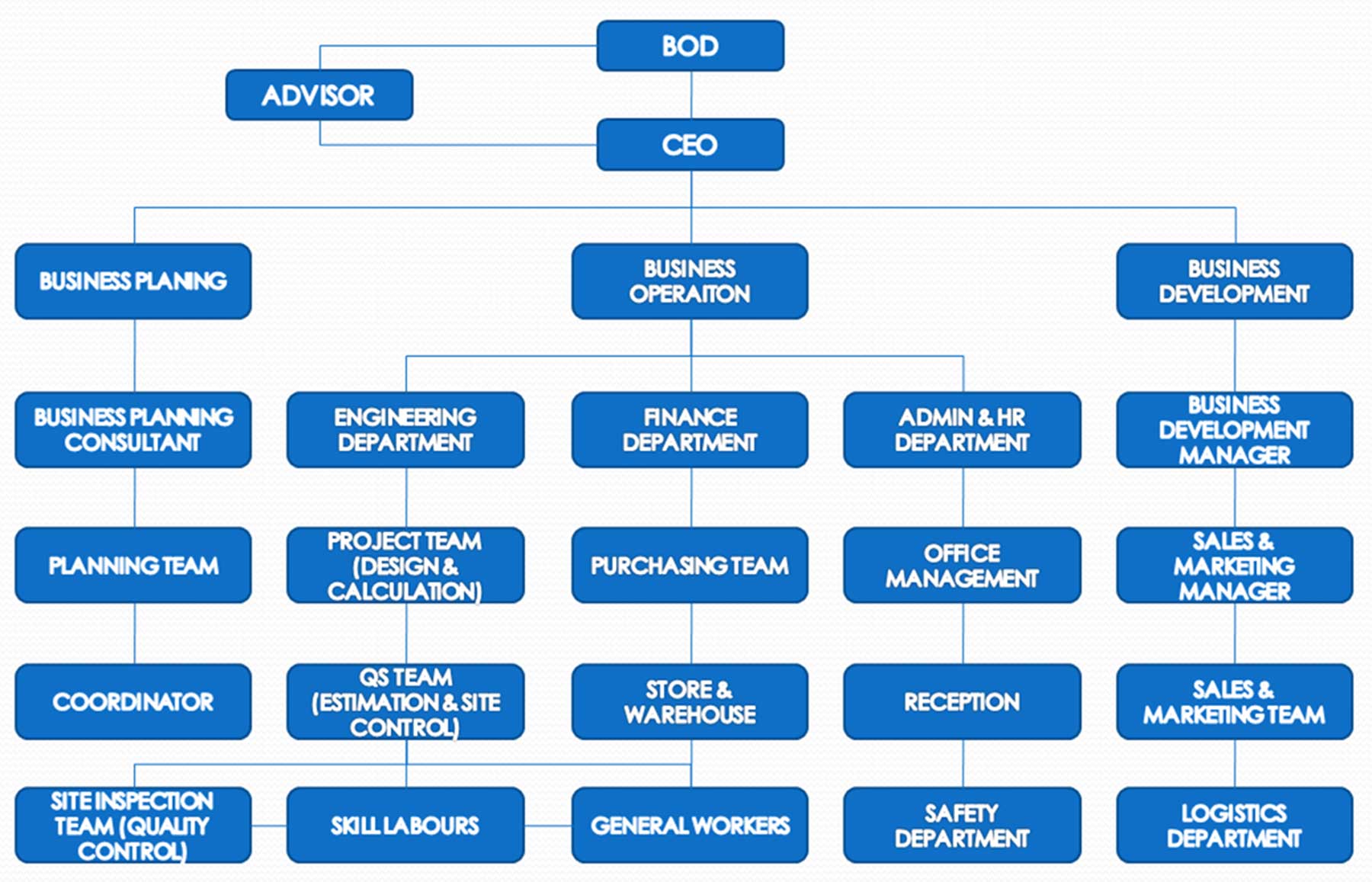
Everyone knows executive leadership and management plays a large role in their corporation by creating a roadmap for the company, and having the final say in big business decisions. It’s why they are paid the big bucks. Every management team in the world has a goal to increase profitability and shareholder value. Therein lies one of the biggest challenges management faces: selecting a strategy to increase shareholder value. One proposition for creating long-term sustainability is inciting internal change management and creating a new vision and set of standards for the company to thrive off. Starting at the top, a company can create a trickledown of success that seeps into the nitty gritty of a product or service. From engineers, to salespeople, to HR, to anyone else in the company, organizational structure is valuable and necessary for sustainable success.
Strategic Dilemmas
Companies are rarely created with the inept ability to remain sustainable (Sancak, 2023). The ones that find their sustainable competitive advantage are usually forged through trial and error while providing an excellent product or service. An excellent product or service provides a crutch of sorts to management because there is an extremely high floor. In other words, we often buy services or products that are not fully optimized. Selling an iPhone offers a lot of room for error because it is an excellent product even with its issues. Still, international competition poses a problem of global sustainability which is one of the biggest challenges seen in organization management today (Sancak, 2023). Products and services are now easier to imitate and substitute due to increased availability of information. Not to mention the threat created by internal issues such as self-serving behavior by non-owners, and owners (stockholders and non-stockholders) alike.
Imitation and substitution are the most direct threats to sustainable organizations today. Imitation occurs when a competitor is able to copy another company’s competitive advantage in the market, leveling out the playing field, and reducing scarcity of a good or service. It poses a problem for the use of R&D dollars because competitors are usually able to receive full detail of a product within a year of release and produce a similar product with less investment (Ghemawat & Pisano, 1997). Substitution is slightly different because it relies on a change of consumer preferences. Organizations are always on the look-out for products or services that can disrupt the market and become adopted into society. For example, electric vehicle makers such as Tesla have significantly challenged the vehicle industry for the past 10 years as a substitute for gasoline cars, many management teams in the industry have made the call for imitation by producing their own electric vehicle.
Internal dilemmas are not as apparent in the bottom line as imitation or substitution might be in the short run, but there are dire consequences to sustainability in the long run. For example, employees within many companies have leverage against ownership, this leverage is called holdup. Employees’ organizational power may come from their skills or experiences which make them more valuable for the company. The value manifests itself in negotiating power towards ownership and can limit profitability of a company. The NFL and its player contracts provide a great example of the bubble created by holdup. Between 1970 and 1984 NFL players’ share of total revenue earned jumped 20% through a 170% increase in player compensation during the time period (Ghemawat & Pisano, 1997). It is evident the players were able to leverage their value at a level detrimental to the operating income of many ownership groups.
The final internal dilemma is when companies cannot or do not realize the full extent of value from their good or service. Sometimes called slack, this effect usually occurs due to organizational problems (Ghemawat & Pisano, 1997). Blackberry is a modern example of slack leading to a decline of profitability. Blackberry was unable to reach their potential even with their foothold in the technology market. Their leadership and internal structure made it difficult to choose a strategy coupled with the fact they had lagged in innovation. Famously their CEO claimed- “we’ll be fine” after the launch of the iPhone in 2007, but since then they went from being Canada’s most valuable company in 2008 to a company with a $5.8 billion dollar deficit.
The Impact of Organizational Behavior
Organizational change is necessary to cope with challenges in any industry and reinventing a structural model can increase probability for sustainable success. Many of the strategic dilemmas faced by a company can be mitigated through this top-down approach. The varying results from business ventures may not be attributed to organizational behavior, however the environment within a company plays a huge role in output. For example, companies with strong visions and goals can provide guidance at the lowest level. A vision can motivate employees and clients alike to create short term goals that guide the business (Sancak, 2023). If everyone finds themselves on the same page as executive management, employees may feel more committed, satisfied, and energized at work (Stein et al. 2021). Increased guidance, energy and commitment will increase the productivity of the workforce and create a higher probability of fending off less motivated competitors. Take Apple and Steve Jobs, for example. Jobs epitomized the concept of combating imitation and substitution through his approach to organizational behavior. He compelled his employees to continue following his vision for products and as a result they were much more apt to make faster decisions and outpace the competition. His leadership style is often scrutinized for being ruthless and hard to work under, however we know one thing for certain is that he inspired top-tier results from his employees.
Another pillar of success for organizational management is performance evaluations. Being self-reflective as a company will increase the likelihood of long-term sustainability (Sancak, 2023). Revisiting successful steps taking place in the organization can benefit by giving more cynical employees a reason to believe the vision as well as adjusting organizational strategy in real-time rather than being passive. Overall, if everyone is onboard and feels they can contribute to long-term goals set by management an organization will be in a better place to mitigate strategic dilemmas in any environment.
References:
Ghemawat, P. & Pisano, G. (1997). “Sustaining Superior Performance: Commitments and Capabilities.” Harvard Business School Background Note 798-008, Available at: https://hbs.edu/faculty/Pages/item.aspx?num=24157
Olson, P. (2015). “BlackBerry’s Famous Last Words at 2007 Iphone Launch: ‘We’ll Be Fine.’” Forbes, Forbes Magazine, www.forbes.com/sites/parmyolson/2015/05/26/blackberry-iphone-book/?sh=48eac3a863c9.
Sancak, I. (2023). Change management in sustainability transformation: A model for business organizations. Journal of Environmental Management, Volume 330, Available at: (https://www.sciencedirect.com/science/article/pii/S0301479722027384)
Stein, D. Hobson, N. Jachimowicz, J. & Williams, A. (2021) “How Companies Can Improve Employee Engagement Right Now.” Harvard Business Review, hbr.org/2021/10/how-companies-can-improve-employee-engagement-right-now.
 Dual Waters